
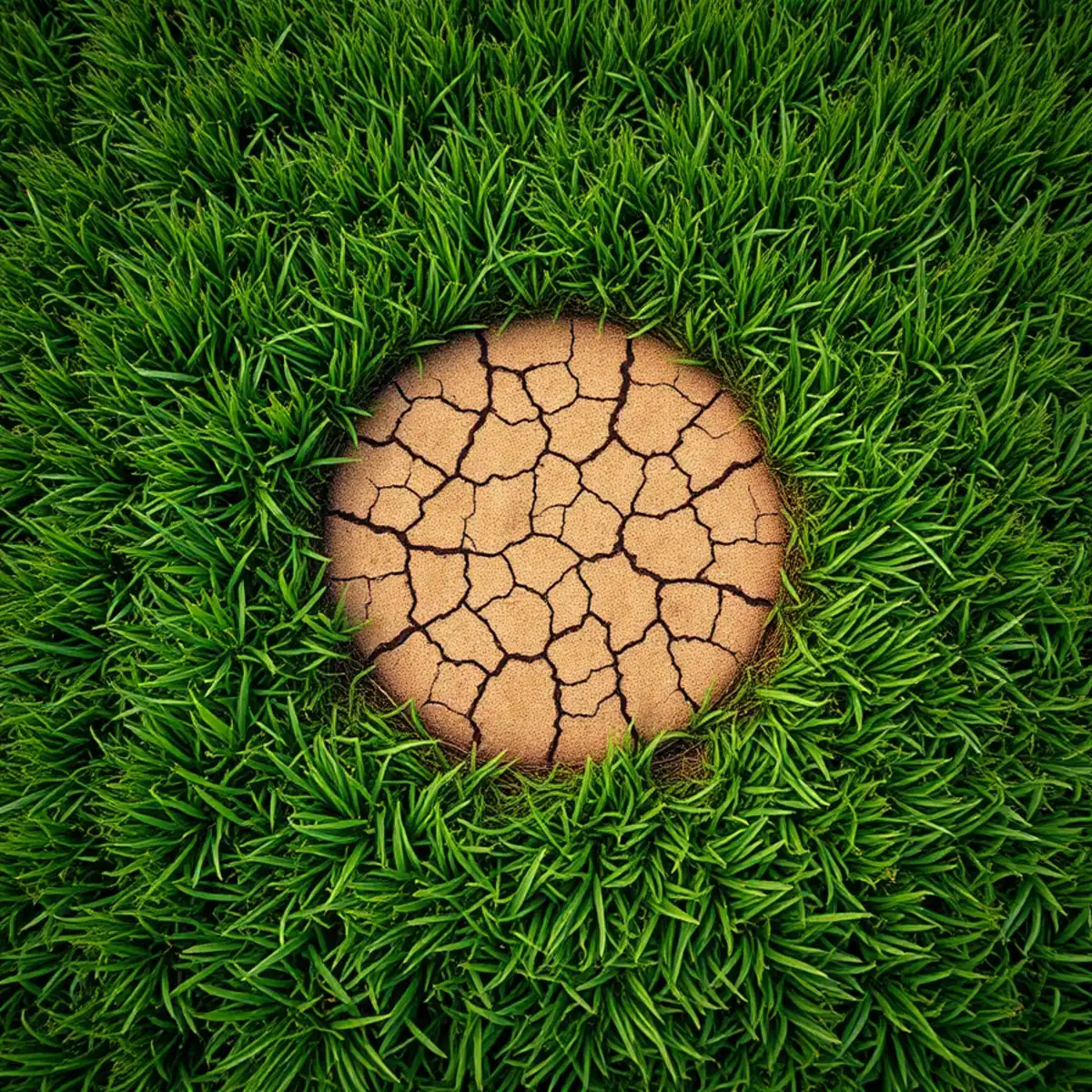
You water, you mow, you do everything right, and then a sick-looking circle shows up overnight in the middle of the yard. Summer lawn disease is one of the most frustrating problems we treat, because it hits lawns that look otherwise healthy. In Georgia's heat and humidity, fungus does not need much of an opening.
The good news is that most summer diseases are predictable. They follow humid nights, warm soil, and a few habits that make turf easy to infect. Learn to spot the big three early and, better yet, change the conditions that feed them, and you can get through the worst of July and August without losing the lawn.
Why Summer Is Disease Season in Georgia
Lawn diseases are fungi, and fungi love exactly what an Atlanta summer delivers: warm days, muggy nights, heavy dew, and leaf blades that stay wet for hours. When nighttime temperatures stay above 68 degrees and the grass never fully dries, spores get everything they need to spread. Add a little too much nitrogen or a shady, still corner with poor airflow and you have built the perfect environment for an outbreak.
Brown Patch: The Big One for Fescue
Brown patch is the disease we diagnose most in Atlanta, and it hammers tall fescue hardest. It shows up as roughly circular tan or brown patches from a few inches to several feet across. In the early morning, before the dew burns off, you may see a darker gray smoke ring around the edge of the patch, which is active fungus on the march. The grass blades pull loose easily and often have irregular tan lesions with a dark border. Because so many intown lawns in Decatur and Druid Hills lean on fescue for shade tolerance, brown patch is a yearly conversation here.
Dollar Spot: Small Silver-Dollar Sized Spots
Dollar spot looks exactly like it sounds: small, straw-colored, sunken spots about the size of a silver dollar, sometimes merging into larger blotches. Look closely on a dewy morning and you can spot fine white cobweb-like threads across the grass. It often signals turf that is short on nitrogen or drought stressed, so it tends to hit lawns that are underfed rather than overfed. It shows up on Bermuda and Zoysia as well as fescue.
Gray Leaf Spot: Watch Fescue and Ryegrass
Gray leaf spot targets tall fescue and ryegrass, and it can move fast in hot, wet weather. It starts as small tan-to-gray spots on the leaf blades that stretch into oval lesions with a darker margin. Badly hit areas take on a scorched, gray cast that many homeowners mistake for drought. It thrives in the same steamy conditions as brown patch, so the two often show up together.
Pro Tip: Water Before Dawn, Not at Night
The most common cause of summer disease we see is evening watering. Grass that stays wet overnight is an open door for fungus. Water once, deeply, between 4 and 8 in the morning so blades dry within a couple of hours. That single change prevents more disease than any fungicide.
Cultural Prevention Beats Fungicide
Fungicide treats symptoms, but the conditions you create decide whether disease takes hold in the first place. Nearly every prevention step is free and comes down to good habits. Here is what actually moves the needle:
- Water deeply in the early morning so blades dry fast, never in the evening
- Ease off nitrogen in the heat of summer, since lush growth invites brown patch
- Mow with a sharp blade to avoid ragged, easily infected cuts
- Never mow wet grass, which spreads spores across the whole lawn
- Improve airflow by thinning crowded shrubs and low tree limbs
- Bag clippings while an active outbreak is spreading
Airflow and soil health carry a lot of weight here. Compacted red clay holds water and stays soggy, which feeds fungus. Fall core aeration and overseeding opens the soil so it drains and dries, and a balanced fertilization and weed control program keeps you from overfeeding at exactly the wrong time of year. Pairing those with our regular mowing service and a sharp blade covers most of the prevention checklist without a drop of fungicide.
When to Reach for Fungicide
Sometimes the weather wins and you need chemical help. Consider a fungicide when a disease is spreading fast across a lawn you care about, when you have valuable fescue you do not want to lose, or when a stretch of hot, wet nights is forecast and your lawn has a history of outbreaks. Timing and product rotation matter, because fungi build resistance to a single active ingredient used over and over. Treat it as a targeted tool inside a good cultural program, not a substitute for one.
Get a Free Estimate on a Healthier Lawn
If a mystery circle has you worried, get eyes on it before it spreads. PinStripe Landscaping is locally owned, licensed and insured, with same-day service available across metro Atlanta. We offer free estimates and no long-term contracts. Call or text Marcques at (323) 606-0255 and we will diagnose the problem and build a prevention plan for your grass type.
PinStripe Landscaping & Pro Svcs
Locally owned lawn care & landscaping in Grant Park, Atlanta. Serving Metro Atlanta for 7+ years.